


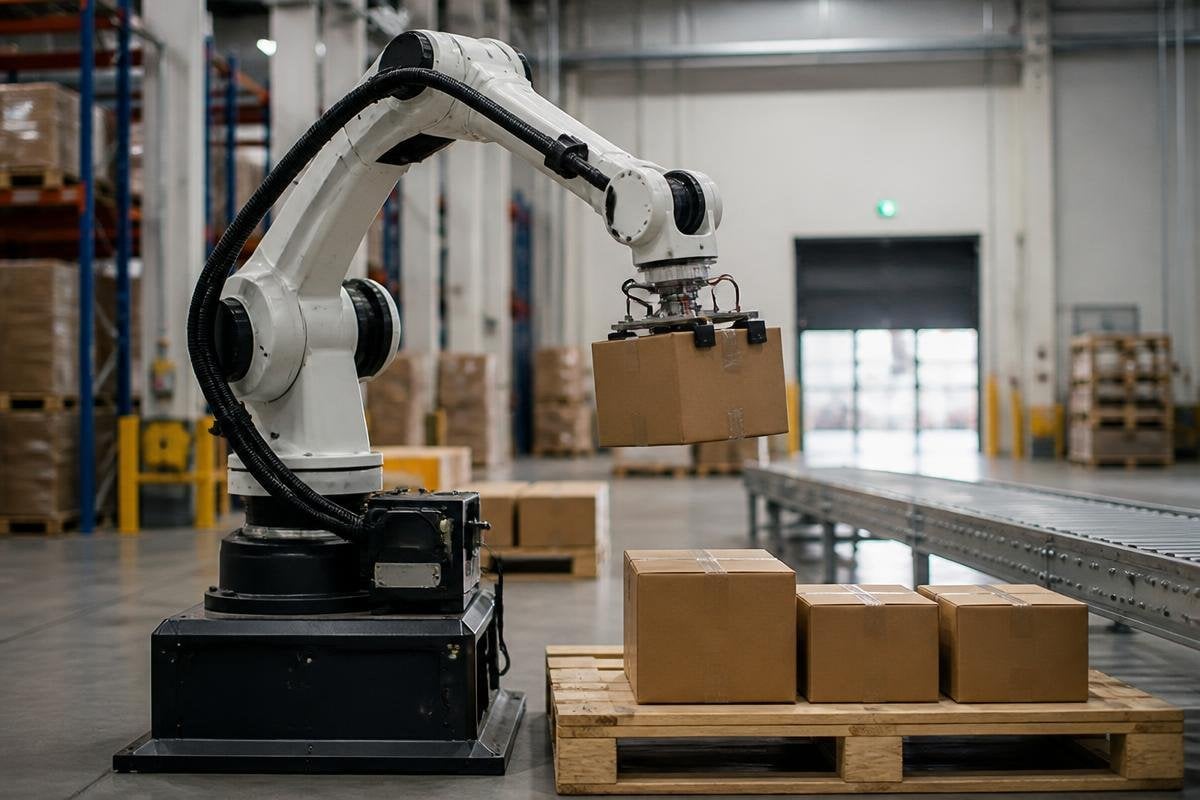
Good hardware can work well and still leave its maker exposed. A defensible robotics company gives customers a reason to stay after the first machine is installed, tested, and paid for.
The question for an investor, buyer, or rival is practical: what would make replacement slow, risky, or expensive?
- Installed work: the robot fits a real process, not a lab demo
- Useful data: each deployment makes the system better for that job
- Hard switching: a replacement needs new software, training, or site work
The robot must fit the work
Hardware alone rarely protects a company for long. A rival can copy a body shape, buy similar sensors, or match a published payload. The harder part is making the robot work inside a customer’s actual process.
That process may include conveyor timing, warehouse software, safety zones, charging points, or the shape of the objects being handled. A company that has tested those links with a customer has more to defend than one selling a machine with a broad list of features.
Look for proof in the deployment details. Can the company name the task, the site conditions, the handoff with existing equipment, and the failure cases it has fixed? If the answer stays at the level of product demos, the position is weak.
A company’s position gets stronger when reporting ties its claims to a named site, task, and result. Robotics company and machine reports can help you check whether the software keeps working after the demo ends.
Software and data matter when they stay specific
Software improves a robot only when the data connects to a real task. A picking system needs records about objects, grasp points, lighting, shelf positions, and failed attempts. A mobile robot needs maps, traffic rules, and details about the site where it runs.
Generic data has limited value. Data tied to one customer’s workflow can reduce setup time, improve recovery from errors, or help the system deal with new objects. The benefit must show up in a result the buyer can check, such as fewer manual stops or less time spent tuning a route.
The company also needs the right to use that data. Contracts may limit what can leave a site, how long records are stored, or whether one customer’s data can train another customer’s system. A strong technical position can weaken if the legal terms block useful learning.
The open question is repeatability. A company may work well at one site because its engineers know that site in detail. Ask whether the same software can move to another site without a large new service bill.
Switching costs need to be fair and real
Customers stay when replacement would interrupt work or force them to rebuild a system. That cost can come from software connections, worker training, maintenance tools, spare parts, safety approval, or years of site data.
The best form of switching cost comes from useful fit. A customer remains because the robot performs a job and the team knows how to run it.
A customer trapped by poor documentation, closed interfaces, or hard-to-find parts may stay once, then choose a different supplier at renewal.
I’d be wary of a company whose main defense is a locked platform. That can protect revenue for a while, but it gives buyers a reason to demand open interfaces and shorter contracts.
Service also matters. When a robot stops production, the customer needs a clear path to diagnosis, repair, and replacement. Check who does that work, where spare parts sit, and what happens when the original team is no longer available.
The business must survive the hardware sale
A single sale can hide a weak business. Hardware revenue arrives at delivery, while support, software, repairs, and deployment work may cost money for years. The company needs a way to price those jobs without making the customer regret the purchase.
Ask how much work each new deployment requires. If every site needs a large engineering team, growth may bring more cost rather than better margins. If setup becomes repeatable, the company has a better chance of supporting more customers with the same product base.
The answer should also include who pays for failures. Contracts may cover uptime, spare parts, software updates, or on-site labor. Until those terms are clear, a claimed recurring revenue stream is only a plan.
A buyer’s defensibility check
Use these questions before signing a contract or backing the company:
- Name the task: Can the company show the exact job, site, and handoff with nearby equipment?
- Measure the gain: Which number improves, and how will the customer check it after installation?
- Test the move: What would a second site need before the robot could run there?
- Read the contract: Who owns the data, software changes, spare parts, and repair work?
- Price the exit: How much time and money would a replacement take?
- Check the team: Who can fix the system after the original deployment engineers leave?
A robotics company has a defensible position when its product, software, service, and customer knowledge work together in a way a rival cannot copy quickly. The test is simple: if the buyer can replace the system over a weekend, the company has a product, not much protection.
