


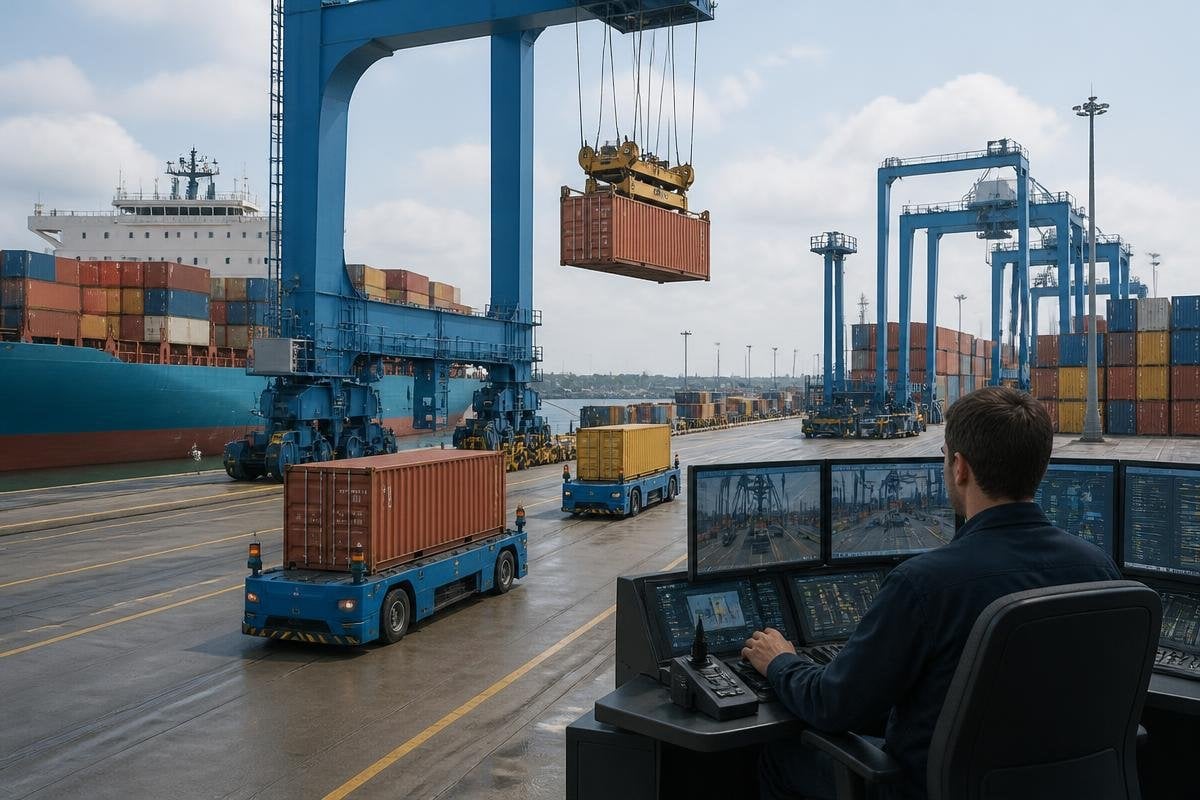
A container terminal moves steel boxes with cranes, guided vehicles, cameras, and software that assigns the next task. The useful change appears when those machines share an operating plan. Containers then spend less time waiting between moves.
- Automated cranes lift containers between ships, trucks, and storage blocks.
- Autonomous vehicles carry containers across the terminal without a driver in each cab.
- Cameras and software check container identity, position, and movement status.
Where robots do the work
The largest machines are ship-to-shore cranes. They lift containers from a vessel and place them on trucks or automated guided vehicles, often called AGVs. A crane operator may control the machine from a remote station rather than sitting above the waterline.
The AGV then carries the container across the yard. Its route comes from terminal software, while sensors help it detect people, vehicles, equipment, and obstacles. The vehicle still needs marked routes, safe speeds, and clear rules for unusual situations such as a blocked lane.
Yard cranes handle the next move. A rail-mounted gantry crane can travel along rows of containers, while a rubber-tyred gantry crane can move between blocks. These cranes place boxes into storage slots and retrieve them when a truck, train, or ship needs them.
That handoff matters. When an empty vehicle is late, the crane loses time, and the same happens when a vehicle waits for a crane. Software tries to keep each part supplied with work, but the result depends on accurate container records and steady traffic flow.
Cameras turn a box into a tracked object
Ports also use cameras and optical character recognition, or OCR. OCR reads letters and numbers from a container, chassis, truck, or rail wagon. The system can compare that reading with the terminal record before the next move starts.
Position sensors add another layer. They help a crane confirm where its spreader is, check whether a container sits in the right slot, and detect a load that has shifted. A small error at this point can create a much larger search task later, so the data needs a human review path.
Port automation brings autonomous vehicles, crane controls, and tracking software into one work area. Reporting at Robot24.com can help you compare those systems with named machines, test sites, and operating limits before the next section looks at what this change means for dock workers.
What changes for people
Automation moves some jobs away from direct machine control and toward supervision, planning, maintenance, and safety checks. Operators still need to deal with faults, weather, damaged containers, and equipment that behaves outside its normal limits.
Remote operation can also change the work setting. One operator may watch several machines or take control when a system stops. That can reduce time spent in noisy or exposed areas, but it raises the need for clear alarms and controls that show which machine needs attention.
Maintenance becomes more important too. A failed sensor can stop a vehicle even when its motor and battery work well. A crane with a worn cable or faulty position reading can hold up a whole sequence of container moves.
The limits are plain. Robots work best on routes, storage areas, and handoffs that the terminal has already mapped. They struggle when containers arrive in the wrong place, road markings fade, equipment blocks a lane, or a person enters an automated zone.
I’d judge a port robot by the number of safe moves it completes during messy operations, not by a smooth demonstration on an empty yard.
Before a terminal buys equipment
A port manager can use this checklist before approving an automation project:
- Define the move: ship to yard, yard to truck, rail transfer, or inspection.
- Count the handoffs: record where a crane, vehicle, person, or software system passes responsibility.
- Set the fallback: name who takes control when a sensor, network link, or route fails.
- Check the data: confirm that container identity, position, and status stay accurate after every move.
- Price the support: include training, spare parts, software updates, and maintenance staff.
- Test the exceptions: use blocked lanes, damaged boxes, poor visibility, and mixed traffic in the trial plan.
The strongest use for port robotics is a repeatable movement with clear boundaries and a human response when conditions change. Terminals that build those rules before buying machines will have a better chance of gaining steady container flow instead of adding another system for people to watch.
